
By: Mymuslimin.com
Far out in the Indian Ocean, on a tiny cluster of islands known as the Cocos (Keeling) Islands, lives a community that feels like a time capsule of the old Malay world. They’re called the Cocos Malays — descendants of Malay, Javanese and Bugis workers brought there in the early 1800s by a Scottish trader named Alexander Hare to work his coconut plantations.


Cut off from the rest of the archipelago for generations, these islanders built a life around faith, family and tradition. They spoke their own lilting form of Malay (Bahasa Cocos), cooked dishes that reminded them of home, and held fast to the customs of their ancestors — from baju kurung and songkok to the rhythm of kompang and zapin.

At the heart of their world stood the mosques — humble yet deeply symbolic. The Home Island Mosque, with its minaret painted in the colours of the Cocos Islands flag, remains the spiritual and social heartbeat of the community. Over on West Island, the West Island Mosque stands as a quiet symbol of self-determination, serving families who move between the islands.
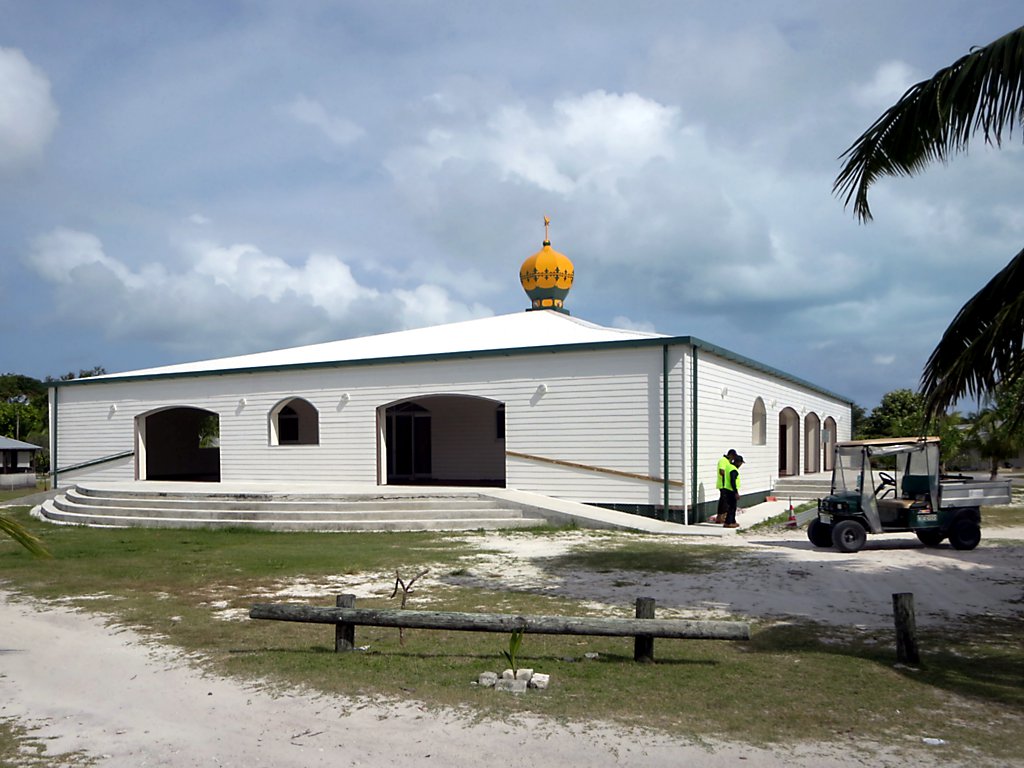
Beyond the islands themselves, the Cocos Malay diaspora carried their faith across the sea. In 1989, they built the Geraldton District Mosque in Western Australia — a proud landmark of their enduring devotion. On Home Island, the Malay Kampong Group, which includes the old mosque, Malay school, and club, still stands as a living museum of their heritage — weathered by time but rich in soul.
For the Cocos Malays, Islam is more than a religion; it’s the anchor of identity. Their mosques are not just places of worship — they are gathering spaces, schools, and symbols of a culture that refused to fade, even when isolated in the middle of the ocean.
It’s extraordinary, really — how a small, forgotten community managed to keep the Malay spirit and Islamic faith alive, generation after generation. The Cocos Malays are living proof that culture isn’t just where you are — it’s who you are.
 mymuslimin.com
Leave a comment